10 Important Factors to Consider When Choosing Healthcare Uniforms
Ten practical factors for choosing healthcare uniforms in Faisalabad - fabric weight, fit, embroidery, pricing and more, from a local uniform manufacturer.
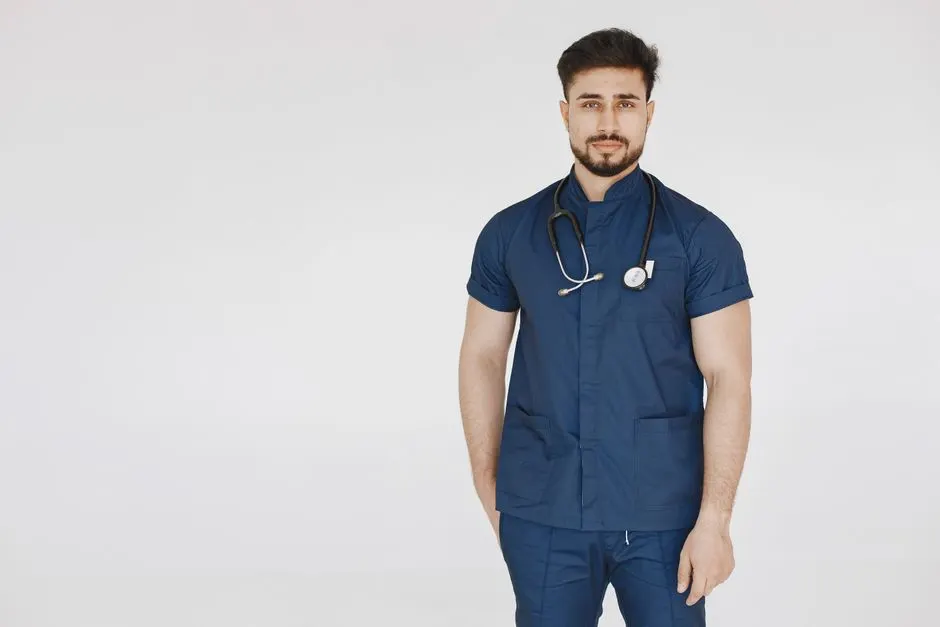
The ten factors that decide whether a healthcare uniform works or fails are fabric, GSM, fit, color coding, branding method, stitching quality, quantity, lead time, price and after-sales support. Get those right and your staff will wear the same set for two to three years; get them wrong and you will be reordering within six months. This guide walks through each factor with real numbers and Faisalabad-specific context, so you can brief a supplier with confidence.
Healthcare uniforms are workwear garments - scrubs, lab coats, nursing tunics and OT sets - built for repeated industrial washing, long shifts and clinical environments. They are not fashion clothing with a hospital logo stitched on. That distinction drives every decision below.
Fabric Choice: The Foundation of Every Healthcare Uniform
Fabric choice in Faisalabad healthcare uniforms comes down to three realistic options: poly-cotton blends, 100% cotton, and performance polyester blends. Each behaves differently under the wash cycles and shift lengths your staff actually face.
Poly-cotton (typically 65% polyester, 35% cotton) is the workhorse. It resists wrinkling, holds color through 50+ industrial washes, and dries fast. For most clinics, hospital wards and diagnostic labs in Faisalabad, this is the default. Pure cotton feels cooler against the skin and is preferred in operation theatres where static is a concern, but it wrinkles and shrinks unless pre-shrunk. Performance polyester blends wick moisture and are the right pick for staff on 12-hour shifts in air-conditioned wards.
Ask your supplier for a fabric swatch and wash it three times at 60°C before committing. If it pills, fades or shrinks more than 3%, walk away. We source and test fabric this way for every client through our Uniform Fabric Sourcing and Wholesale Supply in Faisalabad service, because a bad roll of fabric ruins the entire order.
Fabric Weight (GSM) and Why It Matters in Faisalabad's Climate
GSM - grams per square metre - is the single number that separates a uniform that survives two summers from one that looks tired by Eid. For Faisalabad's climate, where May and June routinely cross 42°C and humidity spikes in July, the sweet spot is 180-220 GSM for scrub tops and 200-240 GSM for trousers and lab coats.
- 150-170 GSM: too thin; goes transparent under fluorescent light and tears at stress points within months.
- 180-220 GSM: the working range for scrub tops, tunics and nursing dresses.
- 220-260 GSM: right for lab coats, OT gowns and winter-weight trousers.
- Above 260 GSM: only for heavy-duty industrial or flame-resistant workwear, not clinical wear.
Thin fabric is the most common corner cut by low-cost suppliers in Faisalabad. It looks fine in the sample bag and fails in week six. If a quote comes in 30% below everyone else, the GSM is almost always the reason.
Fit and Sizing Across Your Whole Team
Fit is where most bulk healthcare uniform orders go wrong. A uniform that fits the head nurse but hangs off the ward boy will not get worn, and unworn uniforms are wasted money.
Insist on a proper size set - at minimum S, M, L, XL and XXL - with separate measurements for chest, waist, hip, sleeve length and total length. Pakistani body sizing varies more than European or American charts assume, so a supplier who only offers S/M/L without measurement tolerance will deliver a batch where 15-20% of garments get returned for alteration.
For teams with mixed body types or a mix of male and female staff, made-to-measure is worth the small premium. Our Made-to-Measure Uniform Manufacturing in Faisalabad service takes individual measurements for each staff member and delivers garments that fit on the first wear, which cuts alteration time to near zero.
Color, Design and Department Coding
Color coding by department - for example, teal for nursing, navy for doctors, maroon for housekeeping - reduces mix-ups in busy wards and looks professional to patients. Pick two or three colors maximum; more than that and your laundry sorting becomes a headache.
Design details that matter in clinical settings:
- V-neck vs round neck: V-neck is easier to pull over a stethoscope and stays cooler.
- Pockets: at least two lower patch pockets plus one chest pocket for pens and a small notebook.
- Fastenings: concealed zips or snap buttons survive industrial washing better than standard buttons.
- Side vents: small slits at the hem improve airflow during long shifts.
If you are starting from scratch, a proper pattern makes the difference between a uniform that looks bought and one that looks designed. Our Uniform Design and Pattern Development in Faisalabad team drafts the block pattern, tests it on a sample garment, and only then moves to bulk cutting.
Branding: Embroidery and Printing That Survives the Wash
Hospital or clinic branding on a uniform has to survive 50-100 industrial wash cycles at 60-80°C. Embroidery does; cheap heat-transfer printing does not.
For logos on chest pockets, sleeves or back panels, embroidered thread is the standard for healthcare. It holds color, does not crack, and looks sharp after years. Screen printing works for large flat areas like back panels on housekeeping or porter uniforms, but the ink must be a plastisol or water-based clinical grade that flexes with the fabric. Heat transfer is the cheapest option and the one that peels first - avoid it on anything that will be washed daily.
We run embroidery and printing in-house, which means you approve one sample before the full run. See the process on our Logo Embroidery and Monogramming in Faisalabad page.
What Do Healthcare Uniforms Cost in Faisalabad in 2026?
Typical 2026 pricing in Faisalabad for a poly-cotton scrub set (top and trousers, 180-200 GSM, single-color embroidery) runs between PKR 2,200 and PKR 3,800 per set depending on quantity, fabric grade and branding. Lab coats in 220-240 GSM sit at PKR 2,800-4,500 each. Made-to-measure adds roughly 15-25% over standard sizing.
Volume matters more than anything else. At 50 sets, expect the top of the range; at 500 sets or more, unit pricing drops by 20-30%. A single embroidered logo on a chest pocket usually adds PKR 150-300 per garment; a multi-color back print adds PKR 250-500.
Beware quotes that come in below PKR 1,800 per set. At that price the fabric is under 150 GSM, the stitching is single-needle, and the embroidery thread is low-grade polyester that fades in ten washes. The cheapest quote is rarely the cheapest uniform.
How Long Should Healthcare Uniforms Last?
A well-made poly-cotton healthcare uniform in Faisalabad should last 18-30 months of daily wear with industrial washing. That works out to roughly 150-250 wash cycles before color fade or seam failure becomes visible.
Three things kill uniforms early: thin fabric (under 170 GSM), single-stitched seams, and hot-water washing above 85°C. If your laundry is running at 90°C with chlorine bleach, even good uniforms will fail in 12 months. Ask your laundry to run at 60-70°C with oxygen-based bleach - that alone can add a year to garment life.
Order 10-15% extra as spares. Staff turnover, size changes and accidental damage mean you will need replacements within the first year, and a small top-up order later costs more per unit than including spares in the original run.
Common Mistakes to Avoid When Ordering Healthcare Uniforms
The mistakes we see most often in Faisalabad healthcare uniform orders are predictable and expensive. Here are the ones to sidestep:
- Ordering on price alone. A PKR 1,700 set that fails in six months costs more than a PKR 2,800 set that lasts two years.
- Skipping the sample. Always approve a physical sample garment before bulk production. Photos lie about fabric hand-feel.
- Ignoring GSM. If the quote does not state GSM, ask. If the supplier cannot answer, that is your answer.
- Under-ordering. Order 10-15% spares. Top-up runs cost more per unit and rarely match the original dye lot.
- Wrong branding method. Heat transfer on daily-wash scrubs will peel within three months. Use embroidery.
- No size trial. Send one garment of each size to a few staff members before the full run.
- Ignoring lead time. A 500-set order with embroidery needs 3-5 weeks. Rush orders cost more and skip quality checks.
When to Call a Professional Uniform Manufacturer
Call a professional manufacturer when your team crosses 20 staff, when you need branded uniforms across multiple departments, or when your current supplier keeps missing sizes and deadlines. Small orders under 20 pieces can sometimes be handled by a local tailor, but anything larger needs a factory with proper cutting, stitching and finishing lines.
A.G. Fabrics handles healthcare uniform orders from 50 pieces upward, from fabric sourcing through embroidery and final packing. If you are also outfitting housekeeping, security or reception staff, we can run those under the same order so colors and branding stay consistent. Our Custom Uniform Manufacturing in Faisalabad service covers the full process - pattern, sample, bulk production and delivery.
Frequently Asked Questions
What is the best fabric for healthcare uniforms in Faisalabad?
Poly-cotton (65% polyester, 35% cotton) at 180-220 GSM is the best all-round choice for Faisalabad's climate. It resists wrinkling, holds color through 50+ industrial washes, and dries fast. Pure cotton suits operation theatres where static matters, and performance polyester blends work for 12-hour shifts in air-conditioned wards.
How much do healthcare uniforms cost in Faisalabad?
In 2026, a poly-cotton scrub set in Faisalabad costs PKR 2,200-3,800 depending on GSM, quantity and branding. Lab coats run PKR 2,800-4,500. Orders above 500 sets typically see 20-30% lower unit pricing. Made-to-measure adds 15-25% over standard sizing.
How long does it take to manufacture a bulk healthcare uniform order?
A 100-200 set order with embroidery takes 2-3 weeks from sample approval. A 500+ set order takes 3-5 weeks. Add one week if you need custom pattern development or multi-color printing. Rush orders are possible but cost 10-20% more.
Can you embroider our hospital or clinic logo on the uniforms?
Yes. We embroider logos on chest pockets, sleeves, collars and back panels using color-fast thread that survives 100+ industrial washes. You approve a stitched sample before the full run. Multi-color logos and text monogramming are both available.
Do you offer made-to-measure healthcare uniforms for individual staff?
Yes. We take individual measurements for chest, waist, hip, sleeve and length, then cut and stitch each garment to fit. Made-to-measure adds 15-25% over standard sizing and eliminates the alteration backlog that plagues bulk S/M/L orders.
Get Help with Custom Uniform Manufacturer in Faisalabad
If you are outfitting a hospital, clinic, diagnostic lab or nursing home in Faisalabad, we can take your order from fabric selection through embroidery and delivery. Call us with your team size, department colors and logo, and we will send a quote within 24 hours.
Call A.G. Fabrics at (92) 300 7674-374 to start your healthcare uniform order.