11 Essential Features of High-Quality Industrial Workwear and Safety Uniforms
Eleven features that separate workwear that survives a Faisalabad summer from workwear that fails in three months - fabric weight, stitching, hi-vis tape and FR ratings.
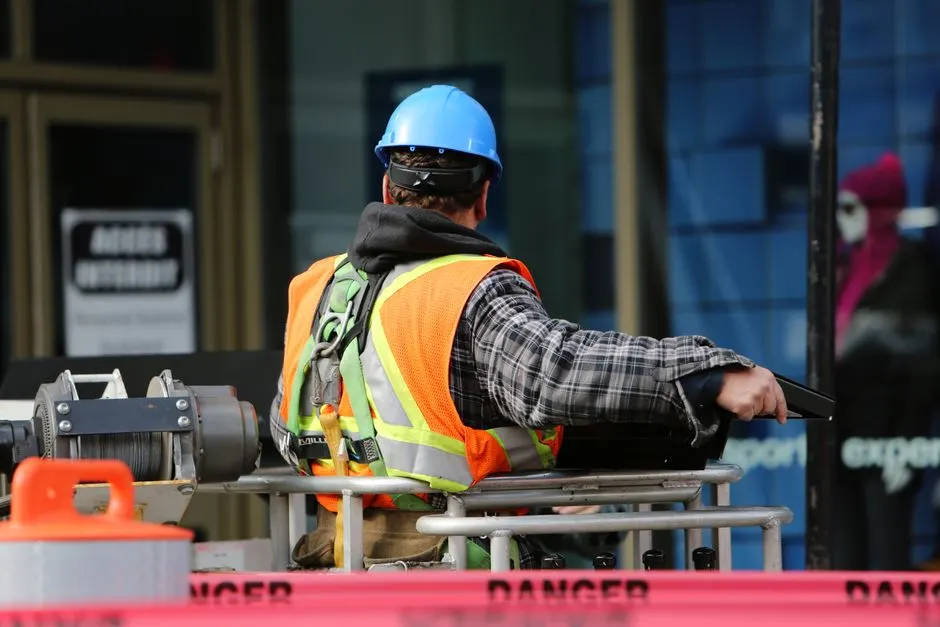
High-quality industrial workwear and safety uniforms are garments built to survive repeated industrial washing, extreme heat and physical abrasion without losing fit, colour or protective function. In Faisalabad, that means fabric of at least 240-280 GSM, double-stitched seams, and hi-vis or FR components tested to a recognised standard - not just a bright colour printed on thin cotton.
Most uniform failures we see across Faisalabad's textile and engineering units trace back to one of eleven specific features being skipped at the buying stage. Below, we walk through each one, what it costs, and how to tell the difference before you place a bulk order.
Why Workwear Quality Matters More in Faisalabad Than Anywhere Else
Faisalabad's climate is the real test bench for any workwear fabric. From April through September, shop-floor temperatures inside textile units, dye houses and foundries routinely sit between 40°C and 48°C, and workers are on their feet for 8 to 12 hour shifts. A coverall that breathes poorly turns into a heat-stress risk by mid-afternoon.
The city's industrial mix also matters. Faisalabad runs on textiles, dyeing, chemicals, food processing, engineering and logistics - sectors with very different hazard profiles. A spinning mill in Sargodha Road needs lightweight, breathable cotton blends. A chemical handling unit near Jaranwala Road needs chemical-resistant finishes and flame-retardant treatment. A logistics fleet running out of the dry port needs hi-vis that holds its reflectivity after 50+ industrial washes.
We have supplied workwear to units across the Faisalabad industrial estate for years, and the pattern is consistent: buyers who specify fabric weight, seam construction and tape class up front get 18-24 months of service life. Buyers who chase the lowest per-piece quote replace the same uniforms every 4-6 months.
What Makes Industrial Workwear High Quality?
Industrial workwear is protective clothing designed for factory, construction, chemical and logistics environments, and it is considered high quality when it holds its fit, colour and protective properties through at least 50 industrial wash cycles. That single benchmark - 50 washes - separates real workwear from ordinary stitched garments.
Everything below is a feature that contributes to that number. Skip three or four of them and you are buying disposable clothing at a premium price.
The 11 Essential Features, Explained
1. Correct Fabric Weight and Fibre Blend
Workwear fabric in Pakistan is graded by GSM - grams per square metre. For industrial coveralls and shop-floor uniforms, 240-280 GSM is the practical minimum. Below 200 GSM, the fabric tears at stress points within weeks. Above 320 GSM, breathability drops and heat stress rises.
Fibre blend matters just as much. A 65/35 poly-cotton twill gives you the best balance for Faisalabad: cotton for breathability, polyester for abrasion resistance and colour retention. 100% cotton is fine for welding-adjacent roles where melting behaviour matters, but it fades and shrinks faster. 100% polyester is cheap and durable but traps heat - a poor choice for a dye house floor.
2. Colour Fastness to Washing and Light
A uniform that fades to a pale grey after three months makes an entire workforce look unmanaged. Colour fastness is measured on a 1-5 grey scale, and industrial workwear should hold a rating of 4 or better for both washing and light exposure.
Ask your supplier for the dye lot and the fastness rating. Reactive-dyed poly-cotton holds colour far better than pigment-dyed fabric, and the cost difference is usually Rs. 40-80 per piece - money well spent when a uniform is expected to last two years.
3. Double-Stitched and Bar-Tacked Seams
Seams fail before fabric does. Look for double-stitched side seams, felled shoulder seams, and bar tacks at every pocket corner, belt loop and fly stress point. A single-stitched seam on a 260 GSM coverall will start opening at the crotch and underarm within 6-10 weeks of daily industrial wear.
Thread matters too. Bonded polyester thread in a 40/2 or 50/3 count outlasts standard cotton thread by a wide margin in high-heat laundering.
4. Reinforced Stress Points
Knees, elbows, pocket mouths and the seat of the trouser take the most abuse. Quality workwear adds either a second fabric layer or a rivet/bar-tack reinforcement at these points. On coveralls, knee pad pockets are worth specifying - they let workers insert foam pads without a separate strap system.
5. High-Visibility Tape to the Right Class
Hi-vis uniforms use retro-reflective tape, and the tape class determines how visible the worker is at night and in low light. For most Faisalabad industrial and logistics roles, tape meeting the EN ISO 20471 Class 2 standard is the correct baseline. Class 3 is required for highway and high-speed traffic exposure.
Cheap tape loses reflectivity after 20-25 washes. Quality tape holds performance through 50 washes. If your night-shift logistics team is running on the Faisalabad-Lahore motorway, this is not a place to save Rs. 100 per piece.
6. Flame-Resistant or Inherently FR Fabric Where Required
Any worker exposed to open flame, molten metal splash, or electrical arc needs flame-resistant workwear. Two routes exist: inherently FR fibres (like aramid blends) that never lose protection, or FR-treated cotton that must be re-treated after roughly 50 washes.
For welding, foundry and petrochemical work in and around Faisalabad, we specify inherently FR fabric. It costs 3-4 times more than standard cotton, but it does not degrade with laundering - and it is the only version that stays compliant across the garment's full life.
7. Correct Fit and Size Grading
Ill-fitting workwear is a safety issue, not a comfort issue. A coverall that is too tight restricts movement and tears at the shoulder. One that is too loose catches on machinery. Proper size grading means the pattern is scaled across S to 5XL with proportional adjustments to sleeve length, inseam and torso - not just a wider chest on the same body.
This is where a Made-to-Measure Uniform Manufacturing in Faisalabad approach beats off-the-shelf imports. We take measurements from your actual workforce, build the size curve, and cut to that curve.
8. Functional Pocket and Tool Layout
Pockets should be placed where the worker actually needs them. A maintenance technician wants a thigh pocket for a wrench and a chest pocket for a pen. A security guard wants a radio loop and a document pocket. A dye house operator wants minimal pockets so nothing catches in machinery.
Generic pocket layouts are one of the most common complaints we hear from supervisors. Specifying pocket placement during Uniform Design and Pattern Development in Faisalabad costs nothing extra and eliminates the complaint entirely.
9. Shrinkage Control
Untreated cotton workwear can shrink 5-8% on the first industrial wash. On a size L coverall, that is a full size drop - and suddenly half your workforce is wearing uniforms that no longer fit.
Quality workwear is either pre-shrunk or sanforized, with residual shrinkage held under 2%. Ask for the shrinkage test data before you approve a bulk order. It takes two minutes and saves a full reorder.
10. Consistent Sizing Across Batches
Your first order of 500 coveralls fits perfectly. Your second order of 500, placed six months later, comes back half a size smaller because the fabric was sourced from a different mill. This is the single most expensive mistake in bulk uniform buying.
The fix is pattern control and fabric lot control. A manufacturer who keeps your approved pattern and fabric specification on file will deliver the same fit every time. That is the core of what we do through Bulk Uniform Manufacturing and Wholesale Supply in Faisalabad.
11. Branding That Survives Industrial Washing
Your company logo on the chest is not decoration - it is how supervisors identify departments and how clients identify your staff on site. Embroidery holds up far better than printing through industrial laundering, though screen printing is fine for short-life promotional uniforms.
For long-life workwear, we recommend embroidery on the chest and, where needed, a heat-transfer reflective logo on the back. Both processes are covered under Logo Embroidery and Monogramming in Faisalabad.
Common Mistakes Buyers Make When Ordering Safety Uniforms
The most expensive mistakes in industrial uniform buying are specification mistakes, not price mistakes. Here are the ones we see most often.
- Buying on per-piece price alone. A Rs. 1,400 coverall that lasts 4 months costs more per year than a Rs. 2,600 coverall that lasts 18 months.
- Skipping the sample stage. Approving a bulk order from a photo is how you end up with 800 uniforms nobody wants to wear.
- Ignoring wash-cycle testing. Ask for a 10-wash sample before bulk production. If the colour, tape and seams survive 10 washes, they will survive 50.
- Mixing fabric lots across a single order. Insist on a single dye lot and a single fabric mill for the whole order.
- Forgetting seasonal variation. Faisalabad summers need lighter, breathable fabric; winters need a quilted or fleece-lined option. Order both at the same time to lock in pricing.
How Much Should Industrial Workwear Cost in Faisalabad in 2026?
Typical 2026 pricing in Faisalabad for industrial workwear runs from Rs. 1,600 for a basic 240 GSM poly-cotton coverall up to Rs. 7,500+ for an inherently flame-resistant garment with hi-vis tape. The range is wide because the specification range is wide.
As a working guide for bulk orders of 100 pieces or more:
- Basic shop-floor coverall (240 GSM poly-cotton, single colour): Rs. 1,600-2,200 per piece.
- Hi-vis safety vest or jacket (Class 2 tape): Rs. 900-1,800 per piece.
- Hi-vis coverall with Class 2 tape and reinforced knees: Rs. 2,800-4,200 per piece.
- FR-treated cotton coverall: Rs. 3,500-5,500 per piece.
- Inherently FR coverall (aramid blend): Rs. 6,500-9,000+ per piece.
Embroidery adds Rs. 80-250 per piece depending on logo size and stitch count. Screen printing runs Rs. 60-180 per piece for orders above 100. Sampling and prototype development typically adds Rs. 15,000-35,000 for the first approved sample, which is a one-time cost you do not repeat on reorders.
Delivery timelines for a 500-piece order in Faisalabad usually run 3-5 weeks from approved sample to dispatch. Rush orders of 200 pieces can be turned around in 10-14 days at a modest premium.
When to Call a Professional Uniform Manufacturer
You should call a professional uniform manufacturer the moment your workforce crosses 20 people, or the moment you have any regulatory exposure - chemical handling, welding, electrical work, night-shift logistics. Below that threshold, off-the-shelf workwear is usually fine. Above it, the cost of getting the specification wrong compounds fast.
We handle the full process at A.G. Fabrics: fabric sourcing, pattern development, sampling, cutting, stitching, branding and bulk delivery. If your current uniforms are failing before 12 months, or if you are about to place your first bulk order and want it done right the first time, our team can walk you through the specification in a single meeting.
We work with textile units, engineering firms, logistics operators, security companies and construction contractors across Faisalabad and the wider Punjab. Whether you need 100 coveralls or 5,000, the process is the same - and the specification decisions are the ones that determine whether you reorder in 18 months or in 4.
Frequently Asked Questions
What GSM fabric is best for industrial workwear in Faisalabad?
240-280 GSM poly-cotton twill is the practical sweet spot for Faisalabad's climate. Below 200 GSM the fabric tears at stress points within weeks; above 320 GSM breathability drops sharply and heat stress becomes a real risk on the shop floor during summer shifts.
How many washes should a hi-vis uniform tape survive?
Quality retro-reflective tape should hold its reflectivity through at least 50 industrial wash cycles. Cheap tape typically fails between 20 and 25 washes. If your team works night shifts or on highways, specify tape rated to 50 washes and ask for the test data.
How long does a bulk uniform order take in Faisalabad?
A 500-piece order typically takes 3-5 weeks from approved sample to dispatch. Rush orders of 200 pieces can be completed in 10-14 days at a modest premium. Sampling and prototype approval adds roughly one week before bulk production begins.
Do I need flame-resistant workwear for my factory?
Yes, if any worker is exposed to open flame, molten metal splash, welding sparks or electrical arc. FR-treated cotton must be re-treated after roughly 50 washes; inherently FR fabrics like aramid blends never lose protection. For welding and foundry work, specify inherently FR.
Can you match our existing uniform design exactly?
Yes. Send us a physical sample of your current uniform and we will reverse-engineer the pattern, fabric specification and branding. We keep your approved pattern on file so every reorder matches the original fit and colour, batch after batch.
Get Help With Custom Uniform Manufacturer in Faisalabad
If you are ready to specify industrial workwear that actually lasts, we can quote your order and send a sample within a week. Call us on +92 300 767 4374 and tell us your headcount, hazard profile and timeline - we will come back with a specification and a per-piece price.