12 Expert Tips to Find a Reliable Bulk Uniform Manufacturer for Wholesale Orders
Twelve practical tips for choosing a bulk uniform manufacturer in Faisalabad - sampling, fabric checks, MOQs, pricing and delivery timelines that hold.
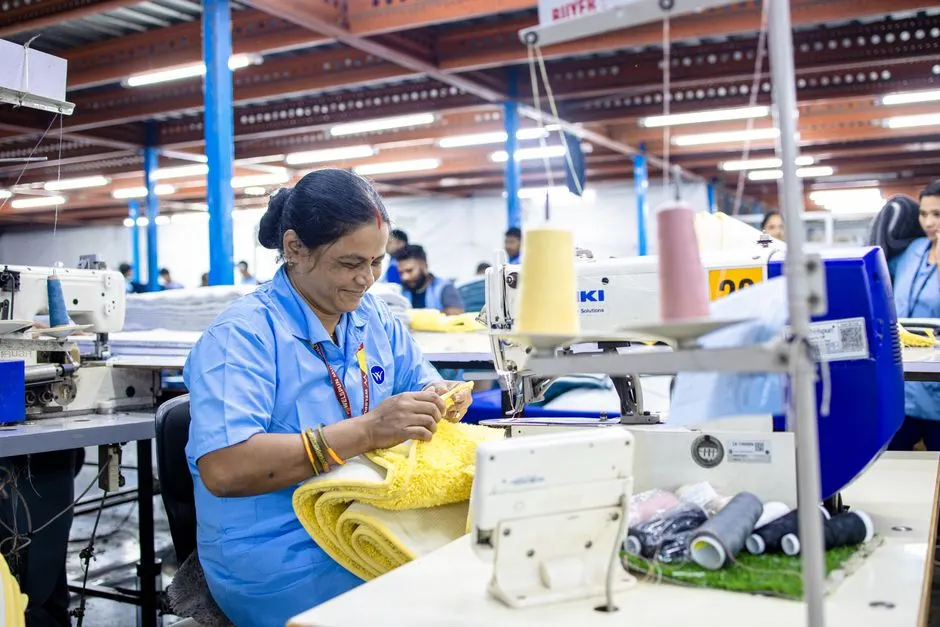
The fastest way to find a reliable bulk uniform manufacturer is to audit the factory before you discuss price: check its stitching floor, ask for a paid sample, confirm fabric GSM with a lab test, and get MOQ, lead time and payment terms in writing. A supplier who passes those four checks will almost always deliver on time; one who dodges them will not. This guide walks through twelve checks we use ourselves, from fabric sourcing to final inspection, so your next wholesale order lands in your warehouse without surprises.
Faisalabad has been Pakistan's textile engine for decades, and that density works in your favour - you can visit three factories in a single afternoon and compare them side by side.
Why Faisalabad Is the Right Place to Source Bulk Uniforms
Faisalabad is Pakistan's largest textile manufacturing cluster, with spinning, weaving, dyeing, stitching and embroidery units sitting within a 20-kilometre radius of the city centre. That means a bulk uniform order placed here can move from greige fabric to finished garment without leaving the district.
For buyers, the practical benefit is speed and cost control. A school in Madina Town ordering 800 shirts and trousers can have fabric woven, dyed, cut and stitched inside three to four weeks. A Karachi-based security company ordering 2,000 guard uniforms can consolidate embroidery and packing in the same facility.
If you are sourcing for the first time, start with a manufacturer that already runs Clothes and fabric manufacturer Faisalabad operations at scale - the infrastructure is already there, and you are not paying for someone to build it.
What Should You Check Before Placing a Bulk Uniform Order?
Before you place a bulk uniform order, confirm four things: a physical production address, a working sample, a written fabric specification, and a delivery schedule with penalties. Everything else - price, branding, packaging - is negotiable after those four are locked.
Bulk uniform manufacturing is garment production that turns fabric rolls into finished, sized, branded uniforms in quantities typically starting at 100 pieces per style. If a supplier cannot explain how their cutting, stitching and finishing lines connect, they are likely brokering your order to a third party.
Tips 1-4: Vet the Factory Before You Talk Price
Tip 1: Visit the production floor in person
Walk the floor. Count the machines, look at the cutting tables, and check whether the stitching lines are running or idle. A factory with 40 machines and 30 operators working is real; a "factory" that is one office with a locked door is not.
Ask to see the finishing section. If garments are being checked, trimmed, pressed and folded in-house, you have found a full-service unit. If they are being packed straight off the machine, expect loose threads and sizing drift.
Tip 2: Ask for a paid sample, not a free one
Free samples are usually made on a different line by a different team, and they rarely match production. Pay for the sample - 5,000 to 12,000 PKR per style is normal in 2026 - and insist it is stitched on the same line that will run your order.
You can read more about how this works under Uniform Sampling and Prototype Development in Faisalabad, where the sample is treated as a signed-off reference garment, not a marketing prop.
Tip 3: Verify the fabric, not the colour swatch
Colour swatches lie. Ask for the actual fabric roll, then check GSM with a fabric cutter and scale. A poly-cotton work shirt for industrial use should sit between 180 and 220 GSM; a light hospital scrub is usually 150 to 170 GSM.
Ask for the mill name and lot number. If your supplier cannot name the mill, they are buying from the open market and your next order will not match the current one.
Tip 4: Confirm MOQ and per-size breakdown
Most Faisalabad factories set a minimum order quantity between 100 and 500 pieces per style. Ask what happens if your size curve is uneven - for example, 60 percent medium and 10 percent extra-large. Some factories charge a small-size surcharge; others simply refuse.
Get the MOQ in writing, along with the per-size minimum for each size band.
Tips 5-8: Lock Down Fabric, Sizing and Branding
Tip 5: Match the fabric to the job, not the budget
A chef's jacket and a construction coverall need different fabrics even if the budget is the same. Ask your supplier to recommend based on use: heat, chemical exposure, wash cycles, and expected lifespan.
For heavy-duty requirements, look at Industrial Workwear and Coverall Manufacturing in Faisalabad - the fabric choices there are built around abrasion resistance and repeated industrial laundering.
Tip 6: Get the size chart in centimetres, not S/M/L
Letter sizes vary by factory. Ask for a full measurement chart in centimetres: chest, waist, shoulder, sleeve length, inseam, and total length. Compare it against your existing uniforms and adjust before cutting.
If you are ordering for a workforce with mixed body types, ask for a made-to-measure option on at least the top 10 percent of sizes. That is where Made-to-Measure Uniform Manufacturing in Faisalabad pays for itself - a few extra rupees per piece saves you from returns and refits.
Tip 7: Test the branding method before you commit
Embroidery and printing behave differently on different fabrics. On a poly-cotton shirt, embroidery holds up to 50+ industrial washes; on a lightweight polyester, screen printing can crack after 20. Ask your supplier to run a wash test on the sample.
For logos with fine detail, embroidery is the safer choice. For large back prints, heat transfer or screen printing is faster and cheaper.
Tip 8: Approve the packaging and labelling spec
Decide early whether uniforms ship flat-packed, on hangers, or individually poly-bagged with size labels. Individually bagged and labelled adds roughly 15 to 40 PKR per piece but saves hours during distribution to staff.
If you are supplying multiple sites, ask for cartons labelled by site and size. It is a small thing that prevents a very large headache.
Tips 9-12: Protect Your Order With Contracts and Timelines
Tip 9: Get the delivery schedule in writing, with dates
Ask for a production schedule broken into milestones: fabric in-house, cutting complete, stitching complete, finishing and packing complete, dispatch. A 1,000-piece order should take 18 to 30 working days from fabric approval.
If the supplier says "two weeks" without a milestone sheet, they are guessing.
Tip 10: Agree on payment terms tied to milestones
Standard practice in Faisalabad is 30 to 50 percent advance, with the balance on dispatch or against inspection. Avoid paying 100 percent upfront, and avoid suppliers who demand it.
For repeat orders, negotiate a 30-day credit line after three clean deliveries. That is the point where trust has been earned on both sides.
Tip 11: Insist on an AQL-based inspection
Ask for a final inspection using AQL 2.5 for major defects and AQL 4.0 for minor defects. This is the standard used across Pakistan's export garment sector, and any serious factory knows it.
If your supplier has never heard of AQL, they are not running a quality system - they are running a hope system.
Tip 12: Keep a reference garment locked away
Once you approve the sample, sign and date it, and keep one copy at your office and one at the factory. Every reorder is checked against that reference. It is the single cheapest way to keep quality consistent across years.
How Much Do Bulk Uniforms Cost in Faisalabad in 2026?
Typical 2026 pricing in Faisalabad for bulk uniforms runs from 1,200 PKR for a basic cotton work shirt at 500+ pieces to 6,500 PKR for a flame-resistant coverall at 200 pieces. The spread is driven by fabric GSM, branding method, and finishing complexity.
- Basic poly-cotton work shirt: 1,200-1,900 PKR at 500+ pieces
- Hospital scrubs (top and trouser): 1,800-2,800 PKR at 300+ pieces
- School uniform set (shirt and trouser): 1,500-2,400 PKR at 800+ pieces
- Industrial coverall with reflective tape: 3,200-5,200 PKR at 300+ pieces
- Flame-resistant coverall (FR-treated fabric): 4,500-6,500 PKR at 200+ pieces
Embroidery adds 80 to 250 PKR per piece depending on stitch count. Screen printing adds 40 to 120 PKR. Individually bagged and labelled packing adds 15 to 40 PKR.
Common Mistakes Buyers Make With Wholesale Uniform Suppliers
The most expensive mistake is choosing on price alone. A supplier who undercuts the market by 20 percent is usually cutting fabric GSM, skipping the finishing stage, or brokering the order to a smaller unit that will miss the deadline.
Other mistakes we see regularly:
- Approving a sample that was made on a different line than production
- Skipping the size chart review and discovering sizing drift after delivery
- Paying 100 percent advance to a supplier with no verifiable factory address
- Not specifying the branding method, then receiving a printed logo where embroidery was expected
- Ordering exactly the headcount and having no buffer for new hires or damaged pieces
Order 5 to 8 percent extra on the first run. It costs less than a second production run for 20 pieces.
When to Call a Professional Uniform Manufacturer
Call a professional manufacturer when your order crosses 100 pieces, when you need branding, or when the uniforms have to meet a safety or hygiene standard. Below that threshold, a local tailor is often faster and cheaper.
At A.G. Fabrics, we handle the full chain - fabric sourcing, cutting, stitching, embroidery, printing, finishing and packing - under one roof in Faisalabad. That means one point of contact, one delivery date, and one reference garment that stays on file for every reorder.
If you are running a mixed order - say, 400 corporate shirts, 200 security uniforms, and 150 hospitality aprons - we can consolidate it into a single production schedule. You can see how that works under Bulk Uniform Manufacturing and Wholesale Supply in Faisalabad.
Frequently Asked Questions
How long does a bulk uniform order take in Faisalabad?
Plan on 18 to 30 working days from fabric approval for orders between 500 and 2,000 pieces. Sampling adds 7 to 10 days before that. Rush orders can be compressed to 12 to 15 days at a 10 to 20 percent premium.
What is the minimum order quantity for custom uniforms?
Most Faisalabad factories start at 100 pieces per style, though some go as low as 50 for simple designs. Below 100 pieces, per-piece cost rises sharply because cutting and setup costs are spread over fewer units.
Can I get uniforms made with my company logo?
Yes. Embroidery is the standard for logos with fine detail and holds up to 50+ industrial washes. Screen printing or heat transfer suits large back prints and is cheaper at high volumes. Both can be combined on the same garment.
Do you deliver bulk uniform orders outside Faisalabad?
Yes. We dispatch across Punjab and to Karachi, Lahore and Islamabad by road and air cargo. Delivery is typically 2 to 4 days after dispatch, with cartons labelled by site and size for easy distribution.
What payment terms are normal for wholesale uniform orders?
Standard terms are 30 to 50 percent advance with the balance on dispatch or against inspection. After three clean deliveries, most suppliers will offer a 30-day credit line for repeat orders.
Get Help With Custom Uniform Manufacturer in Faisalabad
If you need a bulk uniform order stitched, branded and delivered on schedule, our team at A.G. Fabrics handles the full process from fabric to finished garment. Call us on (92) 300 7674-374 and we will walk you through sampling, pricing and lead time for your order.