5 Critical Things to Check Before Hiring an International Uniform Manufacturer
Five checks that separate a reliable international uniform manufacturer from an expensive lesson: fabric weight, sampling, MOQ, compliance paperwork and freight terms.
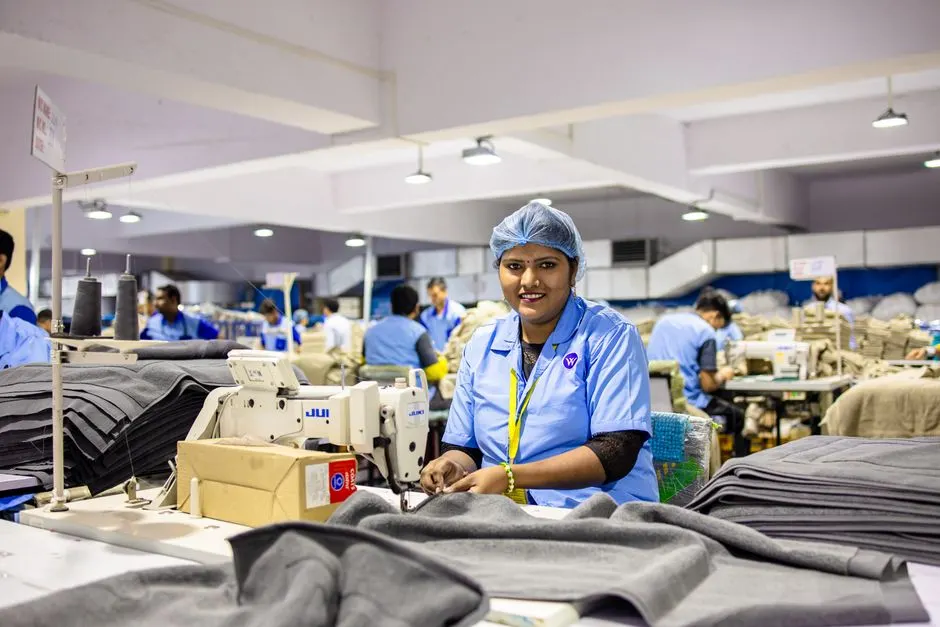
Before you hire an international uniform manufacturer, verify five things: the actual fabric weight and composition, whether sampling is done before the deposit, the true minimum order quantity and lead time, the compliance and export paperwork, and the freight terms that decide who pays when a container is delayed. Skip any one of those and you will find out about it at the port, not at the negotiating table.
We have stitched uniforms for schools, mills, hospitals and security companies out of Faisalabad for years, and the same five questions decide whether an order lands clean or turns into three months of email. Below is what to ask, what a good answer looks like, and the numbers we use when we quote.
1. Fabric Weight and Composition, Not Just the Photo
A uniform that looks right in a WhatsApp photo can arrive at 140 GSM when your workers need 240 GSM. Fabric weight is the single most common gap between what a buyer thinks they ordered and what shows up in the carton.
Ask for the exact construction in writing: yarn count, grams per square metre, blend percentage, and shrinkage after the first wash. For industrial workwear in Pakistan we usually run 240-280 GSM poly-cotton twill, which holds shape through repeated industrial laundering. For healthcare scrubs, 180-200 GSM poly-cotton poplin is the norm because it stays cool through a 12-hour shift. School uniforms sit in the middle at 200-220 GSM.
If a supplier cannot tell you the GSM without checking, that is your answer. A real mill knows its own fabric. This is also where Uniform Fabric Sourcing and Wholesale Supply in Faisalabad matters - the fabric source decides whether your second order matches your first.
What to put in the spec sheet
- Composition: e.g. 65% polyester / 35% cotton
- Weight: GSM with a tolerance of ±5%
- Shrinkage: maximum 3% after three washes
- Colour fastness: grade 4 minimum on a standard wash test
- Weave: twill, poplin, ripstop or canvas
Get that on one page and signed. It is the document you will point to if the second shipment arrives a shade darker than the first.
2. Sampling and Prototype Development Before You Pay a Deposit
Never send a deposit to an international uniform manufacturer who has not produced a physical sample of your garment first. A sample costs you a few hundred dollars and two to three weeks. A wrong bulk order costs you the entire order plus freight both ways.
Good sampling covers more than the look. It covers the fit on real bodies in your size range, the stitch density at stress points, the placement of your logo, and how the collar sits after a wash. We run Uniform Sampling and Prototype Development in Faisalabad as a separate, paid stage precisely because it saves arguments later.
Ask three questions about the sample:
- Is the sample made on the same line that will run my bulk order?
- Can I keep the sample and reference it in the purchase order?
- What is the sample turnaround, and is the cost credited against the bulk order?
A supplier who answers all three clearly is a supplier who has done this before.
3. Minimum Order Quantity and Realistic Lead Times
Minimum order quantity is where most first-time buyers get caught, because the number quoted in the first email is rarely the number that applies to your order. A factory may say 500 pieces, then quietly mean 500 per colour per size run.
Ask for the MOQ broken down three ways: per style, per colour, and per size. Then ask what happens if you need 300 pieces across four sizes and two colours. In our experience, a 300-piece order across two colours is workable at most Faisalabad units; 300 pieces across eight colours is not, because the cutting table has to be reset for every colour.
Lead time is the other half. Typical 2026 timelines from Faisalabad for a 1,000-piece order run 25-35 days for production after sample approval, plus 3-5 days for fabric in-house if it is a stock shade, and 7-14 days for a custom-dyed shade. Ocean freight to Europe adds 28-35 days; to the US East Coast, 35-45 days. Air freight is 5-8 days and costs roughly four to six times more per kilogram.
If a supplier promises 1,000 pieces in 10 days with custom dyeing, they are either brokering the order to someone else or planning to disappoint you.
4. Compliance, Certification and Export Paperwork
Compliance is the check that separates a serious international uniform manufacturer from a stitching unit with a Gmail address. If your uniforms are going to a construction site, an oil facility, a hospital or a government contract, the paperwork matters as much as the stitching.
Depending on the end use, ask for:
- OEKO-TEX Standard 100 certification on the fabric, if the garment touches skin
- EN ISO 20471 or ANSI/ISEA 107 test reports for high-visibility garments
- EN ISO 11612 or NFPA 2112 documentation for flame-resistant workwear
- Colour fastness and shrinkage test reports from a third-party lab
- Certificate of Origin and, where applicable, GSP Plus documentation for EU entry
Ask for the certificate number and the issuing lab. A PDF with a logo and no number is not a certificate. If your order includes High-Visibility Safety Uniform Manufacturing in Faisalabad, the reflective tape spec alone - 3M or equivalent, 5 cm width, retro-reflective value - needs to be in the purchase order, not agreed verbally.
On the export side, confirm who prepares the commercial invoice, packing list, bill of lading and any buyer-specific documentation. If you are importing into the EU, the UK or North America, your customs broker will need the HS code and the declared value per unit. Getting that wrong delays the container by a week or more.
5. Freight Terms, Duties and Who Owns the Risk
Freight terms decide who pays when something goes wrong between the factory gate and your warehouse. FOB, CIF, DDP and EXW are not interchangeable, and the difference on a 1,000-piece order can be several thousand dollars.
FOB (Free On Board) means the supplier gets the goods to the port and loaded; you pay freight and insurance from there. CIF means the supplier pays freight and insurance to your port, but you still handle duties and inland delivery. DDP means the supplier delivers to your door with duties paid - convenient, but you lose visibility on the actual freight cost, and many factories will not offer it.
Ask for the quote in two terms, FOB and CIF, so you can see the freight component. Then ask what happens if the shipment is delayed at origin, damaged in transit, or held at customs. A supplier with a freight forwarder they have used for years will answer in one line. A supplier who has never shipped will go quiet.
For buyers who need the whole package - fabric, cutting, stitching, finishing and packing under one roof - working with a Custom Uniform Manufacturing in Faisalabad partner removes the coordination risk that comes from splitting the order across three vendors.
What Should I Check First When Comparing Uniform Manufacturers?
Check the sample and the fabric spec sheet first, before price. Price is the last thing to compare, because a quote at $8 per unit and a quote at $11 per unit are not the same garment unless the fabric weight, stitch count and finishing are identical.
Build a one-page comparison table with five columns: fabric GSM and composition, sample lead time, MOQ per colour, compliance certificates held, and freight terms offered. Fill it in for every supplier you are considering. The cheapest column is rarely the best row.
If you are sourcing locally as well as internationally, it helps to see how a uniform supplier Faisalabad operation runs day to day - the same discipline that keeps a local order on schedule is what keeps an export order on schedule.
Common Mistakes Buyers Make With Overseas Uniform Suppliers
The same five mistakes come up again and again in this trade, and each one is avoidable with a single email.
- Approving a sample by photo. Screens lie about colour. Ask for a physical sample or a lab-dip on the actual fabric.
- Paying a full deposit before sampling. Pay for the sample separately. Pay the production deposit only after you have approved a physical garment.
- Ignoring size grading. A medium that fits in the sample room may not scale to a 3XL. Ask for the full size chart with tolerance.
- Assuming the second order will match the first. Dye lots shift. Ask the supplier to hold a fabric reserve for reorders.
- Leaving compliance to the last minute. Certificates take weeks to obtain. Start the paperwork the day you place the order.
One more: never let a supplier talk you out of a written purchase order. Verbal agreements do not survive a shipping delay.
When to Call a Professional Uniform Manufacturer
Call a professional uniform manufacturer when your order crosses 200 pieces, when the garment has a compliance requirement, or when you need the same fit and colour repeated across multiple sites and multiple years. Below that threshold, a local tailor can often handle it. Above it, you need a factory with a cutting table, a QC line and an export desk.
At A.G. Fabrics we run sampling, cutting, stitching, embroidery and packing under one roof in Faisalabad, which means one point of contact for the whole order. If you are comparing suppliers and want a straight answer on fabric, MOQ or lead time, send us your spec and we will tell you what is realistic.
Frequently Asked Questions
How long does an international uniform order take from Pakistan?
Production runs 25-35 days after sample approval for a 1,000-piece order. Add 7-14 days for custom dyeing, then 28-35 days ocean freight to Europe or 35-45 days to the US East Coast. Air freight cuts transit to 5-8 days at four to six times the cost.
What is the minimum order quantity for custom uniforms from Faisalabad?
Most Faisalabad units start at 300 pieces per style, and the practical limit is usually per colour rather than per style. Two colours at 150 pieces each is workable; eight colours at 40 pieces each is not, because the cutting table resets for every shade.
Do I need to pay for a sample before placing a bulk order?
Yes, and you should insist on it. A physical sample typically costs $80-$250 depending on complexity and takes 10-18 days. A reputable manufacturer credits that cost against the bulk order once you proceed, and keeps the approved sample as the reference for QC.
What certifications should a uniform manufacturer provide?
OEKO-TEX Standard 100 for skin-contact fabric, EN ISO 20471 or ANSI/ISEA 107 for high-visibility garments, and EN ISO 11612 or NFPA 2112 for flame-resistant workwear. Ask for the certificate number and issuing lab - a logo alone is not proof.
What do FOB and CIF mean on a uniform order?
FOB means the supplier delivers to the port and you pay freight and insurance from there. CIF means the supplier covers freight and insurance to your port, but you still handle duties and inland delivery. Always ask for both quotes so you can see the freight component separately.
Get Help With Custom Uniform Manufacturer in Faisalabad
If you are sourcing uniforms internationally and want a factory that answers the five checks above without hesitation, talk to us. A.G. Fabrics handles sampling, fabric sourcing, cutting, stitching and export packing from Faisalabad, and we will tell you honestly whether your spec and timeline are achievable.
Call us on (92) 300 7674-374 to discuss your order.