8 Reasons Why Pakistan Is a Leading Destination for Affordable Uniform Manufacturing
Pakistan leads global uniform manufacturing on cost, cotton quality and capacity. Here are the eight reasons buyers keep placing bulk orders here.
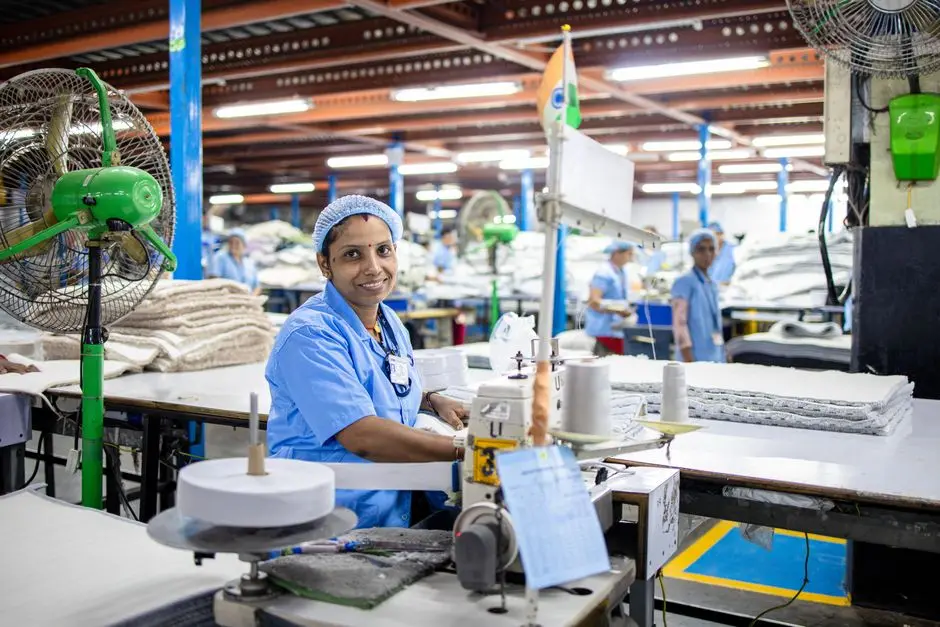
Pakistan is a leading destination for affordable uniform manufacturing because it combines locally grown cotton, one of Asia's largest textile clusters in Faisalabad, and labour costs that are 40-60% lower than in Turkey or China for comparable quality. A basic cotton work shirt that costs $12-$18 to produce in Europe can be made here for $4-$7, with no drop in stitching quality. The rest of this post breaks down the eight structural reasons that gap exists, and what it means for your next bulk order.
If you buy uniforms for a hospital, a security company, a school chain or a factory floor, the country you source from decides your per-unit cost more than any negotiation you'll ever have with a supplier. Pakistan's advantage isn't a discount - it's a supply chain that was built for textiles over 70 years.
1. Pakistan's Cotton Supply Chain Starts at the Farm
Pakistan is the fifth-largest cotton producer in the world, and roughly 70% of the country's textile output begins with domestically grown fibre. That matters for uniforms because the raw material is the single biggest line item in your cost sheet - usually 45-60% of the finished garment price.
When cotton is grown, ginned, spun and woven inside the same country, you cut out two layers of import duty and one layer of freight. A poly-cotton twill for industrial coveralls that would cost $3.20 per metre imported into Europe costs $1.40-$1.80 per metre in Faisalabad. On a 5,000-piece order using 2.5 metres per garment, that's a saving of roughly $17,500 before a single stitch is sewn.
The fibre itself is also well suited to uniforms. Pakistani cotton has a staple length of 27-29 mm, which spins into a yarn strong enough for 200-240 GSM workwear fabrics without needing a high synthetic blend. That's why so many Industrial Workwear and Coverall Manufacturing in Faisalabad operations can offer 100% cotton options that survive 50+ industrial washes.
2. Faisalabad's Textile Cluster Keeps Costs Down
Faisalabad, in Punjab, is often called the Manchester of Pakistan - and for uniform buyers, the nickname is practical, not sentimental. The city has over 250 textile mills, hundreds of dyeing and finishing units, and thousands of stitching operations within a 30-kilometre radius.
That density does two things. First, it compresses logistics: fabric moves from mill to cutting floor in hours, not weeks. Second, it forces competition. When ten fabric suppliers are within a 20-minute drive, prices stay honest and lead times stay short.
For buyers, the practical result is that a full uniform programme - fabric, cutting, stitching, embroidery, packing - can be quoted, sampled and delivered from one city. We run our own operation here, and it's why most of our clients never need to coordinate with a second vendor. You can see the full range of what we produce on our uniform supplier Faisalabad page.
3. Labour Costs That Still Allow Real Craftsmanship
Skilled stitching labour in Pakistan costs $0.90-$1.60 per hour, compared with $4-$6 in Turkey and $8-$14 in Western Europe. That's the number most buyers focus on, but the more important number is stitches per minute.
A trained Pakistani machine operator on a single-needle lockstitch runs 3,500-4,200 stitches per minute on uniform-weight fabric. That's not a low-skill workforce - it's a workforce that has been doing this specific job for generations. Faisalabad alone employs over 500,000 textile workers, many of whom learned the trade from a parent.
The result is that you get hand-finished details - bartacks at stress points, clean collar rolls, even topstitching - at a price point that machine-only factories in other countries can't match. On a 1,000-piece order of security shirts, that difference shows up in how the garment looks after six months of daily wear, not on the invoice.
4. Vertical Integration From Yarn to Finished Uniform
Vertical integration is the quiet reason Pakistani uniforms cost less without looking cheaper. Many Faisalabad manufacturers own or have exclusive contracts with spinning, weaving, dyeing and finishing units, then run cutting, stitching and packing in-house.
Every handoff you remove from a supply chain removes a margin, a delay and a quality risk. A vertically integrated factory can:
- Control dye-lot consistency across a 10,000-piece run
- Adjust fabric weight mid-order if your spec changes
- Cut 3-5 days off a standard 25-day production timeline
- Catch defects at the fabric stage instead of the finished-garment stage
For buyers who need a specific shade of navy across repeat orders, this is the difference between matching your brand colour and hoping for the best. We handle the full chain for our clients, from Uniform Fabric Sourcing and Wholesale Supply in Faisalabad through to final packing.
5. Bulk Capacity That Handles 10,000-Piece Orders
Pakistan's uniform manufacturing capacity is built for volume. A mid-sized Faisalabad factory runs 8-12 stitching lines, each capable of 400-700 garments per day depending on complexity. That's 4,000-8,000 pieces per day across a single facility.
What that means for you: a 10,000-piece hospital scrubs order that would take a small workshop three months can be delivered in 30-45 days. A 25,000-piece school uniform run for the new academic year can be scheduled and shipped inside a 60-day window.
Capacity also protects you against the biggest risk in uniform sourcing - a supplier who takes the order and then subcontracts half of it to a workshop you've never seen. When the factory has the lines, the order stays in the building. If you're placing a large or repeat order, our Bulk Uniform Manufacturing and Wholesale Supply in Faisalabad service is built exactly for that scale.
6. What Does a Uniform Actually Cost in Pakistan in 2026?
Typical 2026 pricing for uniform manufacturing in Pakistan, ex-factory and before freight, breaks down roughly like this:
- Basic cotton work shirt (180 GSM, 1,000 pcs): $4.50-$6.50 per piece
- Poly-cotton industrial coverall (240 GSM, 500 pcs): $9-$14 per piece
- Healthcare scrubs set (poly-cotton, 2,000 pcs): $7-$11 per set
- School uniform (shirt + trouser, 5,000 sets): $8-$13 per set
- Security guard uniform (shirt + trouser + cap, 1,000 sets): $11-$17 per set
- High-visibility safety vest (Class 2, 3,000 pcs): $3.50-$6 per piece
Add 8-15% for embroidery or screen-printed logos, and 3-6% for individual polybag packing if you need retail-ready presentation. Freight to Europe or North America runs $0.40-$1.20 per piece by sea, depending on volume and destination port.
Compare that to the same spec produced in Turkey ($14-$22 for a coverall) or Portugal ($18-$28), and the Pakistan advantage is 45-60% on landed cost. That's not a rounding error - it's the difference between winning a tender and losing it.
7. Export Experience and International Quality Standards
Pakistan exports over $1.5 billion in made-up textiles and garments annually, and uniform manufacturing sits inside that export machine. Factories here are audited against the same standards their buyers demand: ISO 9001, WRAP, Sedex, and for workwear, EN ISO 20471 for high-visibility and EN ISO 11612 for flame-resistant garments.
That audit culture matters more than it sounds. A factory that already passes a WRAP audit has documented its labour practices, its chemical handling and its quality control process. You don't have to build that oversight yourself.
For safety-critical uniforms, the standards are non-negotiable. High-Visibility Safety Uniform Manufacturing in Faisalabad lines that produce to EN ISO 20471 use certified retro-reflective tape and test every batch for retroreflectivity - typically 330-500 cd/lx/m², well above the 330 minimum. Flame-resistant workwear follows similar discipline under EN ISO 11612.
8. Design Flexibility and Private Label Options
Pakistani uniform manufacturers are set up for custom work, not just catalogue repeats. Pattern development, grading across 8-12 sizes, logo placement, colour matching to a Pantone reference - all of it is standard scope, not a special request.
Sampling is fast. A typical development cycle runs 7-12 days from spec sheet to physical sample in your hands, with 2-3 revision rounds included. Once you approve the sample, bulk production starts against that exact reference.
For brands that want to sell uniforms under their own label, private label manufacturing is fully supported. Woven neck labels, printed care tags, branded polybags, custom hangtags - the whole presentation layer is available. Our OEM and Private Label Uniform Manufacturing in Faisalabad service handles this end to end, from your logo files to the sealed carton.
Common Mistakes Buyers Make When Sourcing Uniforms From Pakistan
The savings are real, but they disappear fast if you make one of these five mistakes.
- Choosing on price alone. A quote that's 30% below everyone else usually means thinner fabric, skipped bartacks, or a subcontractor you'll never meet. Ask for the GSM, the stitch count at stress points, and the name of the factory that will actually sew the order.
- Skipping the sample. Never approve bulk production from a photo or a spec sheet. Pay for the sample, wear it, wash it three times, then decide.
- Ignoring fabric weight. A 140 GSM shirt feels fine in the sample room and falls apart in a workshop. For industrial use, insist on 200 GSM minimum; for coveralls, 240 GSM.
- Not locking the colour. "Navy" means five different things across five factories. Send a Pantone number or a physical swatch, and ask for a dye-lot approval before cutting.
- Underestimating lead time. Standard production runs 25-35 days, plus 10-14 days for sea freight. If you need uniforms in three weeks, you're paying for air freight - budget for it or order earlier.
When to Call a Professional Uniform Manufacturer
Call a professional uniform manufacturer when your order crosses 200 pieces, when you need a consistent look across multiple sites, or when your team's safety depends on the garment meeting a standard.
Below that threshold, a local tailor can usually handle the job. Above it, the variables multiply: size grading, fabric consistency, logo placement, delivery scheduling, replacement stock. A manufacturer with dedicated lines and a documented QC process removes those variables.
A.G. Fabrics runs uniform programmes for healthcare groups, security companies, schools and industrial clients from our base in Faisalabad. If you're weighing up a first order or switching suppliers, we'll quote against your spec sheet and tell you honestly whether the numbers work.
Frequently Asked Questions
Why is uniform manufacturing cheaper in Pakistan than in China or Turkey?
Domestic cotton, lower labour costs and a dense textile cluster in Faisalabad cut 45-60% off the landed cost compared with Turkey or the EU. Chinese pricing is closer, but Pakistan usually wins on cotton-based workwear and on smaller minimum order quantities.
What is the minimum order quantity for custom uniforms from Pakistan?
Most Faisalabad manufacturers start at 200-500 pieces per style, per colour. Below 200 pieces, setup costs for cutting, printing and embroidery push the per-unit price up sharply. Some factories will run 100-piece trials at a premium.
How long does bulk uniform production take in Faisalabad?
Standard production runs 25-35 days after sample approval. Add 7-12 days for sampling and 10-14 days for sea freight to Europe or North America. Rush orders can be compressed to 15-20 days with air freight, at roughly 3-4x the shipping cost.
Can I get uniforms made to my exact brand colours and logo?
Yes. Send a Pantone reference for colour and vector files (AI, EPS or PDF) for logos. Dye-lot approval takes 5-7 days, embroidery digitising takes 2-3 days, and screen printing setup takes 1-2 days per colour.
What fabric weights are best for industrial workwear?
For shirts, 180-200 GSM poly-cotton holds up well. For coveralls and trousers, 240-280 GSM twill is the standard. Below 180 GSM, garments lose shape within 20-30 industrial washes.
Get Help With Custom Uniform Manufacturer in Faisalabad
If you're sourcing uniforms for a hospital, factory, school or security team, we'll quote against your spec and send a sample before you commit to bulk. Call A.G. Fabrics at (92) 300 7674-374 and we'll walk through fabric, sizing and delivery timelines for your order.