Custom Uniform Manufacturing: 10 Steps to Achieve Premium Quality and Perfect Fit
Ten practical steps behind premium custom uniform manufacturing in Faisalabad - from fabric sourcing and pattern development to cutting, stitching and finishing.
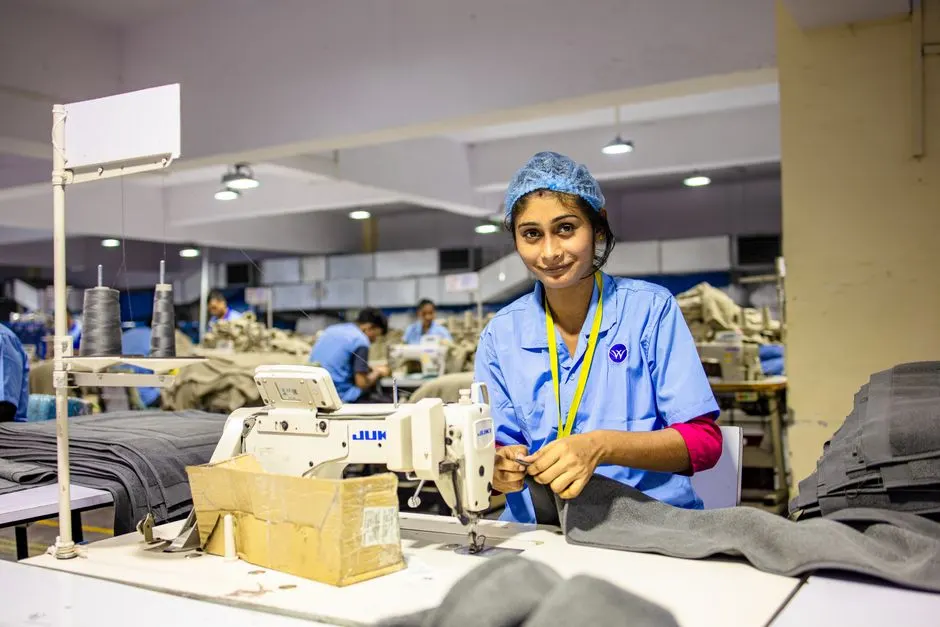
Custom uniform manufacturing is the process of building a uniform to a specific organisation's design, fabric and size requirements rather than buying ready-made stock. Premium quality and a perfect fit come down to ten controlled steps, and skipping any one of them shows up on the wearer's shoulders within a month. This guide walks through each step the way we run it at our Faisalabad unit, with the numbers, tolerances and timelines that actually decide whether a uniform programme succeeds.
Faisalabad has been a textile town for generations, and that matters here. The mills, dye houses and finishing units within a 20-kilometre radius of the city give a uniform manufacturer access to fabric quality and lead times that are hard to match elsewhere in Punjab. We build on that supply chain every day.
What Custom Uniform Manufacturing Actually Means
Custom uniform manufacturing is a made-to-order production service that turns a client's design brief into finished uniforms cut, stitched and branded to that client's exact specification. It is different from wholesale ready-made supply because every measurement, fabric weight and colour reference is set by the buyer, not by a catalogue.
Three things separate a custom programme from an off-the-rack order:
- Pattern ownership. The block pattern is drafted for your team's body sizes, not borrowed from a generic size chart.
- Fabric control. You choose the composition, weight (GSM), colour fastness and shrinkage performance.
- Repeatability. The same pattern and fabric spec are held on file so a reorder six months later matches the first batch.
Most of our clients in Faisalabad come to us after a bad first experience with a general stitcher - usually mismatched shades between batches, collars that curl after two washes, or a size run that simply does not cover the actual staff body types. The ten steps below are the fix.
Step 1: Brief and Wearer Profiling
The brief is where a uniform programme is won or lost. Before we quote anything, we need to know the environment the uniform will live in: indoor office, outdoor construction site, hospital ward, kitchen line, or a security post that runs 12-hour shifts.
We ask five questions on every brief:
- How many wearers, and how many size bands do they fall into?
- What is the working environment - heat, chemicals, grease, dust, or air-conditioned?
- How often will the uniform be washed, and by whom?
- Is there a logo, and where does it sit?
- What is the reorder horizon - one batch, or a rolling supply over 12 months?
A 40-wearer security contract and a 400-wearer factory floor order are different animals. The first needs a tight size run and heavy fabric; the second needs graded patterns and a fabric that survives industrial laundering. Getting this right at the brief stage saves weeks later.
Step 2: Uniform Design and Pattern Development
Pattern development converts the brief into a technical drawing and a graded size set. This is the step most buyers underestimate, and it is the single biggest driver of fit quality.
For a typical corporate shirt, we draft a base block, then grade it across five to seven sizes. Collar depth, armhole curve, sleeve pitch and back yoke height all get adjusted per size - not simply scaled up by a fixed percentage. Naive scaling is why a size XL from a cheap supplier fits like a size L with longer sleeves.
For more specialised programmes - Industrial Workwear and Coverall Manufacturing in Faisalabad being a common one - the pattern work includes action pleats, reinforced knees, and a two-way zip layout so a wearer can move freely on a scaffold or a factory floor.
We deliver the pattern file, a spec sheet and a size chart to the client before cutting anything. If the size chart does not match your staff's actual measurements, we redraft it. That conversation costs a day. Fixing it after 500 pieces are cut costs a month.
Step 3: Uniform Fabric Sourcing and Wholesale Supply
Fabric selection determines how the uniform looks after 30 washes, not on delivery day. Two shirts can look identical on the hanger and behave completely differently after a month of industrial laundry.
For most uniform programmes we work in these ranges:
- Corporate shirting: 110-140 GSM poly-cotton (65/35 or 60/40), with a minimum 3.5% shrinkage allowance and colour fastness of 4 or better on the grey scale.
- Industrial workwear: 240-320 GSM cotton twill or poly-cotton twill, often with a stain-release finish.
- Healthcare scrubs: 160-190 GSM poly-cotton with an antimicrobial finish that survives 50 industrial wash cycles at 70°C.
- Hospitality: 180-220 GSM poly-viscose blends that hold a press through a full shift.
We source through Faisalabad's own mill network, which keeps lead times short - typically 7 to 14 days for standard fabric, longer for specialty finishes. Our Uniform Fabric Sourcing and Wholesale Supply in Faisalabad service covers the full chain: mill selection, lab-dip approval, bulk dyeing, and pre-production fabric inspection.
Always approve a lab dip, not a screen colour. A shade that looks right on a monitor can be two points off on a dyed roll. We send physical swatches for sign-off before bulk dyeing begins.
Step 4: Uniform Sampling and Prototype Development
A sample is the cheapest insurance in uniform manufacturing. One prototype costs a fraction of a bulk run and exposes every problem - fit, drape, stitch density, logo placement, colour match - before you commit.
Our standard sampling cycle runs 5 to 10 working days for a simple shirt or trouser, and 10 to 15 days for a multi-piece workwear set. The client receives:
- One physical sample in the approved fabric
- A fit photo set on a live model or mannequin
- A stitch and construction checklist
- A logo placement mock-up
We do not move to bulk until the client signs off on the sample in writing. If the sample needs a second revision, we do it - a two-day delay here beats a two-month dispute later. Our Uniform Sampling and Prototype Development in Faisalabad service exists specifically for clients who want to test before they commit to volume.
Step 5: Made-to-Measure Sizing and Grading
Made-to-measure sizing takes the approved sample pattern and applies it to your actual wearer list. This is where a uniform stops being a garment and starts being a fit.
For teams under 50 wearers, we measure individually - chest, waist, hip, shoulder, sleeve length, inseam and neck. For larger teams, we use a graded size set with a fit trial on 5 to 10% of the workforce to confirm the size distribution before cutting.
Two rules we hold to:
- Never assume a size label. A wearer who says "medium" in a retail shirt may be a large in a uniform block. We measure.
- Always cut a spare size band. A 100-wearer order should include 5-8% extra pieces in the two most common sizes for new hires and replacements.
Our Made-to-Measure Uniform Manufacturing in Faisalabad service handles individual measurement and grading for teams of any size, from a 15-person restaurant floor to a 600-person factory.
Step 6: Custom Uniform Cutting
Cutting accuracy decides whether 500 pieces fit consistently or 500 pieces fit like 500 different garments. A 3-millimetre drift in the cutting table becomes a 6-millimetre mismatch at the shoulder seam.
We cut in layers of 20 to 60 plies depending on fabric weight, using a straight knife for bulk and a band knife for precision curves. Key controls:
- Fabric relaxed for 12-24 hours before cutting to allow shrinkage to settle
- Marker efficiency target of 82-88%, which keeps fabric waste and cost down
- Notches and drill marks on every panel so stitching aligns without guesswork
- Bundle numbering so a size M body never gets paired with a size L sleeve
Our Custom Uniform Cutting in Faisalabad service runs these controls as standard, and we keep the marker file on record for every repeat order.
Step 7: Custom Uniform Stitching and Tailoring
Stitching is where the pattern and the cut become a wearable garment. The difference between a uniform that lasts 12 months and one that lasts 36 months is almost entirely stitch density and seam construction.
Our standard construction specs:
- 10-12 stitches per inch (SPI) on main seams for shirting; 8-10 SPI on heavy workwear
- Double-needle side seams and armholes on all workwear
- Bar-tacked stress points - pocket corners, belt loops, fly openings, and sleeve vents
- Flat-felled or French seams on any garment that will be industrially laundered
We run separate lines for light shirting and heavy workwear because the machine settings, needle sizes and thread weights are different. A single line trying to do both produces mediocre results on one or the other. Our Custom Uniform Stitching and Tailoring in Faisalabad service keeps those lines separate.
Step 8: Logo Embroidery and Monogramming
Branding is where most uniform programmes quietly fail. A logo that peels, cracks or fades after 10 washes makes the whole uniform look cheap, regardless of how good the fabric is.
Two main methods, and the choice matters:
- Embroidery: best for corporate, hospitality, security and healthcare. Stitch count typically 6,000-12,000 per logo. Holds up through 50+ industrial washes.
- Screen printing or heat transfer: best for high-volume, low-cost branding on t-shirts and light workwear. Heat transfer is faster but has a shorter wash life - usually 25-35 cycles before visible cracking.
We digitise the logo file first, run a test stitch on scrap fabric, and get client approval on the physical stitch-out before production. Our Logo Embroidery and Monogramming in Faisalabad service covers digitising, stitch-out approval and bulk embroidery in-house.
Step 9: Stitching and Finishing
Finishing is the last 5% of the process and the first thing a wearer notices. It covers trimming, pressing, inspection, folding and packing.
Our finishing line runs a three-stage inspection:
- Inline check at the stitching station - the operator flags defects immediately
- End-line check - full garment inspection against the approved sample, including measurement verification on 10% of pieces
- Final audit - random pull of 5% of the batch for measurement, stitch and colour check
Any piece outside a ±6-millimetre tolerance on key measurements goes back for correction or is rejected. The full Stitching and Finishing in Faisalabad process also includes steam pressing, individual poly-bagging and size-labelled packing so the client can distribute straight from the carton.
Step 10: Bulk Uniform Manufacturing and Wholesale Supply
Bulk production is where everything above gets repeated at scale without losing consistency. A 50-piece order and a 5,000-piece order should produce the same garment - the only difference is the number of times the process runs.
Typical lead times from approved sample to delivered bulk:
- 100-500 pieces: 15-25 working days
- 500-2,000 pieces: 25-40 working days
- 2,000+ pieces: 40-60 working days, staged deliveries available
We hold the approved sample, pattern file, fabric spec and marker on record for 24 months so a reorder matches the original batch. Our Bulk Uniform Manufacturing and Wholesale Supply in Faisalabad service handles staged delivery for clients who want to roll out uniforms department by department rather than all at once.
What to Watch Out For
The same five mistakes show up in almost every failed uniform programme we are asked to rescue. If you see any of these in a supplier's process, walk away.
- No physical sample. A supplier who will not produce a sample before bulk is gambling with your money.
- Screen-colour approval only. Digital colours lie. Always approve a physical lab dip or swatch.
- Single-line stitching. One line trying to run shirting and heavy workwear will produce weak seams on one or the other.
- No size grading. A supplier who scales a size M pattern up by 10% for XL is not grading - they are guessing.
- No reorder record. If the pattern and fabric spec are not held on file, your second order will not match your first.
One more: watch the wash-care label. A uniform that says "dry clean only" for a factory floor is a red flag - the fabric was chosen for cost, not for the environment.
When to Call a Professional
Call a professional uniform manufacturer when your team is larger than 20 wearers, when the uniform has to survive industrial laundering, or when the uniform carries a logo that has to look sharp for years. Below that scale, a local tailor can often handle it - above it, the pattern, grading and finishing controls matter too much to leave to a general stitcher.
We are A.G. Fabrics, a custom uniform manufacturer working out of Faisalabad. Our team handles the full ten-step process in-house - brief, pattern, fabric, sampling, cutting, stitching, branding, finishing and bulk supply - so nothing gets lost between subcontractors. If you are planning a uniform rollout for a factory, hospital, hotel, school or security company in Punjab, we can walk you through the process and give you a fixed quote based on your actual wearer list.
Frequently Asked Questions
How long does custom uniform manufacturing take in Faisalabad?
From approved sample to delivered bulk, expect 15-25 working days for 100-500 pieces, 25-40 days for 500-2,000 pieces, and 40-60 days above 2,000 pieces. Sampling adds 5-15 days before that. Rush timelines are possible for smaller orders if fabric is in stock.
What is the minimum order quantity for custom uniforms?
Our practical minimum is 50 pieces per design for a cost-effective run. Below 50, per-piece cost rises sharply because pattern development, sampling and setup are spread over fewer units. For teams under 50, made-to-measure individual stitching is usually the better route.
Can you match our existing uniform design for a reorder?
Yes, if you can supply a physical sample or clear photos with measurements. We reverse-engineer the pattern, match the fabric weight and colour, and produce a sample for your approval before bulk. If you have the original pattern file, even better - we can match exactly.
Do you supply uniforms outside Faisalabad?
We ship across Punjab and to other major cities in Pakistan. Freight is quoted separately based on volume and destination. For orders above 500 pieces, we can arrange staged deliveries so you receive stock in batches rather than all at once.
What fabric is best for industrial workwear?
For most factory and construction environments, 240-320 GSM cotton twill or poly-cotton twill works best. It resists abrasion, holds shape through industrial washing, and takes embroidery cleanly. For hot environments, a poly-cotton blend at the lower end of that range breathes better than pure cotton.
Get Help With Custom Uniform Manufacturing in Faisalabad
If you are ready to move from a rough idea to a finished uniform programme, we can take you through all ten steps and deliver a batch your team will actually want to wear. Call us on (92) 300 7674-374 and we will talk through your wearer count, environment and timeline - then send you a fixed quote.