How to Import Custom Uniforms from Pakistan: 10 Important Tips for International Buyers
A practical guide for international buyers on importing custom uniforms from Pakistan, covering fabric sourcing, sampling, pricing, QC and shipping from Faisalabad.
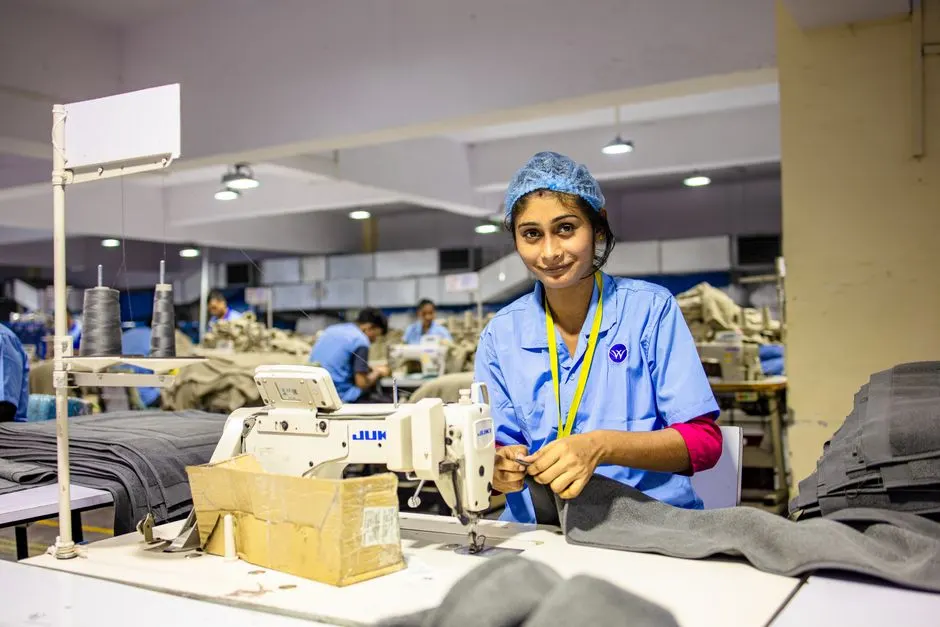
Importing custom uniforms from Pakistan works best when you treat it as a manufacturing project, not a shopping transaction. The short answer: source from Faisalabad, order a physical sample first, agree on a written QC standard, and pay through proper banking channels - do those four things and you avoid 90% of the problems international buyers run into. This guide walks through ten practical tips, from fabric selection to customs clearance, based on what we see working with overseas buyers every week.
Importing custom uniforms from Pakistan is the process of contracting a Pakistani garment manufacturer to produce branded or plain workwear, school uniforms, healthcare scrubs, security uniforms or corporate attire to your specification, then shipping the finished goods to your country. It is worth doing because Pakistan is one of the world's largest textile exporters, and Faisalabad sits at the centre of that industry.
Why Faisalabad Is the Right Place to Source Custom Uniforms
Faisalabad produces more woven and knit fabric than any other city in Pakistan, which means uniform manufacturers here can source raw material within a 20-kilometre radius and pass that cost advantage to you. The city's textile cluster includes spinning mills, dyeing units, weaving factories and stitching floors, all connected by a supply chain that has been running for decades.
For international buyers, that density matters. When a fabric runs short mid-production, a Faisalabad manufacturer can restock in days rather than weeks. When you need a specific poly-cotton blend, twill weight or flame-resistant finish, the mills here either stock it or can weave it to order. That is why so much of the world's workwear, school uniform and healthcare apparel originates from this region.
We run our own production out of Faisalabad as a uniform supplier Faisalabad buyers can visit, audit and hold accountable. That physical presence is the difference between a real manufacturing partner and a trading desk that outsources everything.
Tip 1: Start With Fabric, Not With Price
The fabric you choose determines how your uniforms perform, how they feel, how long they last and - critically - what they cost. Buyers who start by asking "what is your cheapest price per unit" almost always end up with a garment that fails within six months.
For most uniform applications, the workhorse blends are:
- 65/35 poly-cotton twill - the standard for corporate, security and industrial uniforms. Takes dye well, resists shrinking, holds a crease.
- 100% cotton - preferred for healthcare and hospitality where breathability matters more than wrinkle resistance.
- Poly-viscose - used in airline and hospitality uniforms for a smoother drape and better colour retention.
- Cotton-rich ripstop or canvas - for industrial workwear and coveralls that take heavy abrasion.
Ask for the fabric's GSM (grams per square metre), composition and shrinkage rate before you approve anything. A 180 GSM polo and a 220 GSM polo look identical in a photo and behave completely differently after ten washes.
Tip 2: Lock Down Your Tech Pack and Size Grading Before You Ask for Quotes
A tech pack is the document that tells the factory exactly what to make: measurements, tolerances, stitch types, thread colour, label placement, packaging. If your tech pack is vague, every quote you receive will be based on a different assumption, and none of them will match the final invoice.
Include these in every tech pack:
- Flat sketches or reference photos with annotations
- Full measurement chart per size (chest, waist, length, sleeve, shoulder)
- Accepted tolerance (typically ±1 cm on most uniform measurements)
- Fabric specification with GSM and composition
- Branding method and placement coordinates
- Packaging and labelling requirements
Size grading is where most first-time importers lose money. If you sell uniforms in the US, UK or Gulf, your size chart will not match Pakistani domestic sizing. Send your own graded chart, not a request to "use standard sizes".
Tip 3: Always Order a Sample Before a Bulk Run
A sample costs you a few hundred dollars and two to three weeks. Skipping it costs you an entire production run. There is no shortcut here - you cannot judge fabric hand-feel, stitch quality, colour accuracy or fit from a photograph.
Order at least one sample in your middle size and one in your largest size. Wear them, wash them, and check the seams after washing. If the sample is wrong, fix it before bulk. If it is right, approve it in writing and keep a sealed copy as your golden sample.
We build this step into every order through Uniform Sampling and Prototype Development in Faisalabad, because a signed-off sample is the only reliable reference when the bulk shipment arrives.
Tip 4: Understand What Drives Your Per-Unit Cost
Per-unit cost in 2026 for a basic poly-cotton work shirt from Faisalabad typically lands between USD 4.50 and USD 9.00 FOB Karachi, depending on fabric weight, branding and order quantity. A healthcare scrub set runs USD 8 to USD 15. A flame-resistant coverall can exceed USD 25 because the fabric itself is expensive.
The variables that move your price the most:
- Order quantity - 500 pieces and 5,000 pieces are not the same business. Most factories have a minimum order quantity (MOQ) between 300 and 1,000 pieces per style.
- Fabric weight and composition - heavier GSM and specialty finishes cost more.
- Branding complexity - a single chest logo is cheap; multi-colour screen printing on both sides is not.
- Number of sizes and colourways - every additional size or colour adds setup time.
- Packaging - polybag, hangtag, individual folding and carton labelling all add cost.
Get your quote broken down by line item. A single lump-sum price hides where the money is going and makes negotiation impossible.
Tip 5: Get Your Branding Method Right
Branding is where uniforms either look professional or look cheap, and the method you choose should match the fabric and the use case. Embroidery is durable and premium but limited in detail. Screen printing is cheap at volume but cracks over time on stretchy fabric. Heat transfer handles multi-colour logos on performance fabrics but can peel if applied poorly.
For corporate and hospitality uniforms, embroidery on the chest and a woven label inside the collar is the standard. For industrial workwear, screen printing with plastisol ink holds up better against abrasion. For high-visibility garments, reflective tape placement is regulated and must be specified precisely.
Send your logo as a vector file (AI, EPS or SVG). A JPEG will force the factory to redraw it, and redrawn logos are where spelling errors and proportion mistakes creep in.
Tip 6: Agree on a Written QC Standard
Quality control is not a promise - it is a document. Before production starts, agree in writing on what "acceptable" means: stitch density, seam strength, colour tolerance, measurement tolerance, and the maximum percentage of defects you will accept in a shipment.
The industry-standard AQL (Acceptable Quality Limit) for garment inspection is 2.5 for major defects and 4.0 for minor defects. Ask your manufacturer to inspect against that standard and to send you the inspection report before the goods leave the factory.
If you cannot visit Faisalabad yourself, hire a third-party inspection company to do a mid-production and pre-shipment check. The cost is small compared to the cost of rejecting a container.
Tip 7: Plan Your Shipping and Customs Before Production Ends
Shipping is not a step you figure out at the end. Start the paperwork while production is still running, or your goods will sit in a warehouse while you chase documents.
Most uniform shipments leave Pakistan through Karachi Port or Port Qasim for sea freight, or through Lahore and Karachi airports for air freight. Sea freight from Karachi to Europe takes roughly 25 to 35 days; to the US East Coast, 35 to 45 days. Air freight is 5 to 8 days but costs five to ten times more per kilogram.
You will need a commercial invoice, packing list, bill of lading or airway bill, certificate of origin, and - for many destinations - a textile declaration or conformity certificate. Confirm the exact HS code for your garment type with your customs broker, because duty rates vary significantly between woven shirts, knit shirts and workwear.
Tip 8: Pay Through Proper Banking Channels
Pay through bank transfer against a proper contract, not through informal channels. Pakistan's State Bank regulates foreign exchange, and a manufacturer cannot legally receive payment outside the banking system without creating problems for both sides.
The standard structure is 30% to 50% advance with the balance against a copy of the bill of lading. Some factories will accept a letter of credit (L/C) for larger orders, which protects both parties but adds bank fees and paperwork.
Never pay the full amount upfront to a factory you have not worked with before. Never pay to a personal account when the contract is with a company. If a supplier insists on either, walk away.
Tip 9: Match the Manufacturer to Your Uniform Type
Not every Faisalabad factory makes every kind of uniform. A shop that produces school uniforms may have no experience with flame-resistant industrial coveralls, and a workwear specialist may not be set up for delicate hospitality fabrics.
Match your product to the manufacturer's actual specialism:
- Healthcare and medical - antimicrobial finishes, easy-care blends, colour-fast whites.
- Industrial and construction - heavy canvas, reinforced knees, Flame-Resistant and Fire-Resistant Workwear in Faisalabad for oil, gas and welding environments.
- Security and police - structured shoulders, epaulettes, badge holders, durable dark dyes.
- Hospitality and airline - lighter fabrics, tailored fits, subtle branding.
- School and corporate - high-volume, standardised sizing, cost-sensitive.
Ask for references from buyers in your sector. A factory that has shipped to your market before already knows the sizing, labelling and compliance expectations.
Tip 10: Build a Relationship, Not Just an Order
Your second order will always be easier, cheaper and faster than your first - but only if you treated the first one as the start of a relationship. Factories prioritise buyers who communicate clearly, pay on time and reorder consistently.
Visit if you can. A trip to Faisalabad takes two days and tells you more about a factory than a year of email. If you cannot visit, do a video walkthrough of the production floor. Ask to see the cutting table, the stitching lines and the finishing section - not just the showroom.
Keep your tech pack updated. Give feedback on every shipment. Pay on schedule. These small habits are what turn a one-off purchase into a supply chain you can rely on for years.
Common Mistakes International Buyers Make
The mistakes that cost international buyers the most money are almost always the same ones, and almost all of them are avoidable with a bit of discipline at the start.
- Approving a quote without a tech pack. The factory quotes one thing, you expect another, and the dispute is unwinnable because nothing was written down.
- Skipping the sample. A two-week sample stage saves a two-month production disaster.
- Using local sizing instead of your market's sizing. A "large" in Pakistan is not a "large" in the UK or US.
- Ignoring shrinkage. Cotton uniforms that are not pre-shrunk can lose 3% to 5% of their length after the first industrial wash.
- Underestimating duty and freight. Landed cost is often 30% to 60% higher than FOB price once shipping, duty and customs clearance are added.
- Paying outside banking channels. It creates legal exposure on both sides and leaves you with no recourse if something goes wrong.
- Not inspecting before shipment. Once the container sails, your leverage disappears.
When to Call a Professional
You should bring in a professional uniform manufacturer when your order exceeds a few hundred pieces, when your design needs pattern development, or when your uniforms have to meet a compliance standard like flame resistance or high-visibility reflectivity. At that scale, the cost of getting it wrong is far higher than the cost of getting help.
At A.G. Fabrics, we handle the full production cycle in Faisalabad - pattern development, fabric sourcing, cutting, stitching, branding and packing - so you deal with one team instead of five. If you are sourcing for a school, hospital, security firm, hotel group or industrial operation, we can walk you through the process and quote against your tech pack.
Frequently Asked Questions
What is the minimum order quantity for custom uniforms from Pakistan?
Most Faisalabad uniform factories set a minimum order quantity between 300 and 1,000 pieces per style. Below 300 pieces, per-unit cost rises sharply because setup, cutting and sampling costs are spread over fewer garments. Some factories accept 100 to 200 piece trial orders at a premium.
How long does it take to manufacture and ship custom uniforms from Pakistan?
Sampling takes 10 to 15 days. Bulk production takes 25 to 40 days depending on quantity and complexity. Sea freight adds 25 to 45 days to your destination port. Total lead time from order confirmation to delivery is typically 60 to 90 days.
How much does it cost to import custom uniforms from Pakistan?
In 2026, basic poly-cotton work shirts run USD 4.50 to USD 9.00 per unit FOB Karachi. Healthcare scrubs run USD 8 to USD 15. Add 30% to 60% for freight, duty and customs clearance to estimate your landed cost per unit.
Do I need to visit Pakistan to import uniforms?
No. Most international buyers never visit the factory. A detailed tech pack, a physical sample, third-party inspection and clear written QC standards replace the need for a site visit. A video walkthrough of the production floor is a useful substitute.
What payment terms are standard for Pakistani uniform manufacturers?
Standard terms are 30% to 50% advance with the balance against a copy of the bill of lading. Larger orders may be handled through a letter of credit. All payments should go through proper banking channels to comply with State Bank of Pakistan regulations.
Get Help With Custom Uniform Manufacturer in Faisalabad
If you are ready to move from research to production, we can take your tech pack, quote it honestly, sample it quickly and run the bulk order without surprises. Call A.G. Fabrics at (92) 300 7674-374 and we will walk you through fabric options, pricing and lead times for your specific uniform programme.