OEM vs Private Label Uniform Manufacturing: 9 Key Differences Every Buyer Must Know
OEM means the factory builds to your design; private label means you brand a proven existing cut. Here are the 9 differences that decide your cost and lead time.
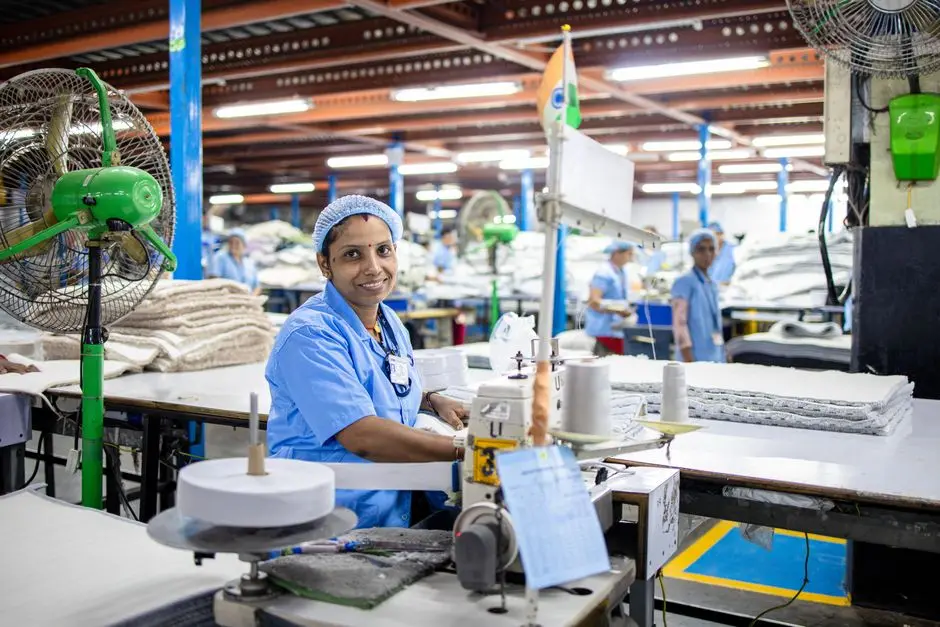
OEM uniform manufacturing means the factory builds a garment to your own design, pattern and specification, then puts your brand on it. Private label uniform manufacturing means you buy a proven cut the factory already makes, and the only thing that changes is the label, the colour and the logo. That single difference decides almost everything else you will negotiate - tooling cost, minimum order quantity, sampling time, unit price and how fast a reorder lands.
This guide breaks the choice into nine practical differences, using real numbers from the Faisalabad textile belt where most of Pakistan's uniform production actually happens. By the end you will know which route fits your order size, your brand plans and your budget for 2026.
The Short Answer: OEM vs Private Label
Pick OEM when you need a garment that does not exist yet - a specific pocket layout, a reflective tape placement, a fabric weight nobody stocks, or a fit that matches your own size chart. Pick private label when you need 300 to 3,000 pieces fast, in a standard workwear or scrub cut, with your logo on the chest and your brand on the neck label.
Most buyers in Faisalabad start with private label for their first run and move to OEM once volumes cross roughly 2,000 to 3,000 pieces per style per year. That is the point where the extra design cost starts paying for itself in fit, fabric savings and brand differentiation.
What Is OEM Uniform Manufacturing?
OEM (original equipment manufacturing) uniform production is a build-to-spec service where the buyer supplies the design brief, tech pack, size grading and branding, and the factory supplies the cutting, stitching, finishing and packing. The buyer owns the pattern. The factory owns the process.
In practice this means you hand over a tech pack with measurements, seam types, thread colour, fabric GSM, label positions and packing instructions. Our team then develops the pattern, sews a fit sample, and only starts bulk cutting after you sign off. If you want to see how that development stage works end to end, look at Uniform Design and Pattern Development in Faisalabad - it covers the tech pack items that cause the most rework when they are missing.
OEM is the right route when your uniform is part of your brand identity, not just a shirt your staff wear. Security companies, airlines, hospitals and large industrial plants almost always go OEM because their garment has to meet a written specification.
What Is Private Label Uniform Manufacturing?
Private label uniform manufacturing is buying an existing factory style and rebranding it. The pattern, fit and construction already exist and have already been tested on hundreds of thousands of pieces. You choose the fabric colour, the logo method and the label, and the factory runs it.
The advantage is speed and price. There is no pattern development, no fit sample cycle, no grading cost. A private label run of 500 polo shirts or 800 scrub sets can move from confirmation to dispatch in 12 to 18 working days, compared with 30 to 45 days for a full OEM development.
The trade-off is that you are one of many buyers wearing the same cut. If your competitor orders from the same factory, their staff uniform will look almost identical to yours apart from the logo.
1. Who Owns the Design and the Pattern
In OEM, you own the pattern and the size grading. That matters more than most buyers realise. Once you own a graded pattern set, switching factories later is straightforward - any competent unit can cut from your pattern. In private label, the factory owns the pattern and you license its use for your order only.
Ask one question before you sign anything: who holds the pattern file if we part ways? If the answer is the factory, you are renting your own uniform design.
2. Branding: Your Label vs the Factory Label
Both routes let you put your logo on the garment, but the depth of branding differs. Private label typically covers a woven neck label, a printed care label and a chest logo. OEM lets you specify woven labels, printed size tabs, custom buttons, branded zipper pulls, inner neck tape and even custom packaging.
Logo application is where costs move. A simple one-colour chest embroidery on 500 pieces runs roughly PKR 35 to 60 per piece. A four-colour screen print on the back of a polo is closer to PKR 25 to 45 per piece at that volume. If your design mixes embroidery and print, or needs a woven badge, see Logo Embroidery and Monogramming in Faisalabad for how the two methods compare on durability and price.
3. Minimum Order Quantities and Tooling Costs
Private label MOQs sit lower because nothing new has to be built. A typical Faisalabad private label run starts at 300 pieces per colour per style. OEM MOQs usually start at 500 to 1,000 pieces per style, and can go higher if the fabric has to be custom-dyed.
Tooling is the hidden line item. OEM adds pattern development, grading across four to six sizes, and a fit sample. Budget PKR 25,000 to 60,000 for pattern development and grading on a single style, plus PKR 8,000 to 15,000 per sample round. Private label carries none of that.
- Private label: 300-piece MOQ, no tooling, 12-18 day lead time
- OEM: 500-1,000 piece MOQ, PKR 25,000-60,000 tooling, 30-45 day lead time
- Custom-dyed OEM fabric: add 15-20 days and a 1,000-metre dye minimum
4. Sampling, Approval and Lead Times
OEM runs on a sample-first cycle: development sample, fit sample, size-set sample, then bulk. Each round takes 7 to 12 days including courier. Three rounds is normal, so plan six to eight weeks from brief to first bulk delivery.
Private label skips most of that. You approve a stock swatch card and a logo placement, and production starts. If you need uniforms for a new site opening in six weeks, private label is usually the only route that fits.
Whichever route you take, insist on a sealed approval sample that stays with the factory. That single sealed piece settles 90% of quality disputes before they start.
5. Fabric Control and Sourcing Freedom
OEM gives you full fabric control. You can specify 100% cotton, poly-cotton blends, ripstop, twill, or a flame-resistant weave, and you can nominate the mill. Private label ties you to whatever fabric the factory already stocks for that style.
Faisalabad's advantage here is real: the city produces a large share of Pakistan's woven and knit fabric, so mills are within a few kilometres of most stitching units. That shortens fabric lead time and lets us hold stock for repeat orders. If your uniform needs a specific weight or finish, our Uniform Fabric Sourcing and Wholesale Supply in Faisalabad service covers mill selection, GSM verification and lab testing before cutting begins.
6. Unit Cost, Setup Cost and Real Landed Price
Private label wins on unit price at low volume. OEM wins on unit price at high volume, once tooling is amortised. Here is how typical 2026 pricing in Faisalabad compares for a basic poly-cotton work shirt.
- Private label, 500 pieces: PKR 1,150-1,450 per piece, no setup
- OEM, 500 pieces: PKR 1,350-1,700 per piece, plus PKR 35,000-75,000 setup
- OEM, 3,000 pieces: PKR 1,050-1,300 per piece, setup absorbed
The crossover point sits around 1,500 to 2,000 pieces. Below that, private label is cheaper. Above it, OEM usually lands lower per piece and gives you a better garment.
7. Quality Consistency Across Repeat Orders
OEM holds consistency better because the pattern, fabric and construction are locked to your spec. Every reorder cuts from the same graded pattern, so a size-40 shirt from batch one and batch six match.
Private label consistency depends on the factory's stock fabric. If the mill discontinues the shade you approved, the next run will be close but not identical. For a 50-person office that is fine. For a 2,000-person security force where staff mix across sites, shade drift becomes visible and expensive.
8. Compliance, Certificates and Export Paperwork
OEM is the only practical route when your uniform has to meet a written standard. Flame-resistant coveralls need fibre composition certificates and after-wash performance data. High-visibility garments need retro-reflective tape tested to the right class. Medical scrubs may need anti-microbial finish documentation.
Private label can still carry certificates, but only for the fabric and construction the factory already uses. If you need a specific standard, ask for the test report before you commit. Our Industrial Workwear and Coverall Manufacturing in Faisalabad work routinely involves this paperwork for oil, gas and construction clients.
9. Scalability and Reorder Speed
Private label scales fastest on reorders. Once your logo screen or embroidery file is on record, a repeat run of 500 pieces can ship in 10 to 14 days because nothing needs re-approving.
OEM reorders are also fast once the pattern exists - usually 18 to 25 days - but the first order is slow. If your headcount grows unpredictably, private label absorbs that better because you can top up in smaller batches.
Common Mistakes Buyers Make in Faisalabad
The most expensive mistake is ordering OEM without a written tech pack. Verbal instructions produce a garment that is close but wrong, and you pay for the second sample round.
Other mistakes we see regularly:
- Approving a sample without checking shrinkage after one wash - a 5% shrink on a cotton shirt changes the fit entirely
- Ignoring size grading and ordering one size curve for a workforce that needs three
- Choosing the cheapest fabric for a uniform that gets washed 200 times a year
- Not sealing the approval sample, then arguing about shade three months later
- Assuming private label means you can change the pattern - it does not
If your order spans multiple sites or cities, plan the logistics early. Uniforms for staff across Punjab often need to reach depots and offices far from Faisalabad, and our Driver and Logistics Uniforms in Faisalabad work shows how delivery scheduling affects the real cost per piece.
When to Call a Professional Uniform Manufacturer
Call us when your order crosses 300 pieces, when the garment has to meet a written standard, or when your current supplier's sizes keep drifting between batches. Those three signals mean the order is big enough that a mistake costs more than the manufacturing.
A.G. Fabrics handles both routes from our Faisalabad unit. We will tell you honestly which one fits your volume - private label if you need speed and a low first order, OEM if you need a garment that is genuinely yours. We quote per piece, we do not pad the setup line, and we seal an approval sample before any bulk cutting starts.
Frequently Asked Questions
Is private label cheaper than OEM for uniforms?
Yes, below roughly 1,500 pieces. Private label avoids PKR 25,000-60,000 in pattern and grading costs, so a 500-piece run lands 15-20% cheaper per piece. Above 2,000 pieces, OEM unit pricing usually drops below private label once tooling is spread across the order.
Can I switch from private label to OEM later?
Yes, and most buyers do. You keep your logo files and fabric approvals, then add pattern development on top. Expect one extra sample round and about 30 days of development before the first OEM bulk run ships.
What is the minimum order for OEM uniforms in Faisalabad?
Most units start at 500 pieces per style. Custom-dyed fabric pushes that to 1,000 pieces or a 1,000-metre dye minimum. Below 500 pieces, private label is the practical option.
How long does OEM uniform production take?
Six to eight weeks from brief to first bulk delivery. That covers two to three sample rounds at 7-12 days each, plus 18-25 days for cutting, stitching and finishing once you approve the size set.
Does private label mean lower quality?
No. Private label uses the factory's proven construction, which is often better tested than a first-time OEM pattern. Quality only drops if you accept a lighter fabric or skip the wash-test on the approval sample.
Get Help With Custom Uniform Manufacturer in Faisalabad
Tell us your headcount, your fabric preference and your deadline, and we will tell you within a day whether OEM or private label makes more sense for your order. We manufacture both routes from our Faisalabad unit and quote per piece with no hidden setup padding.
Call A.G. Fabrics on (92) 300 7674-374 to start your uniform order.